 Pars HadishDetailed product introduction · 1
Product concept
University transport payment concept
Product introduction
The Pars Hadish university transport payment concept provides a way to collect and track university shuttle fares by route and work shift.
Under this concept, each payment request is linked to its route and shift, and its result is displayed as approved, declined, or unresolved. This distinction helps drivers and support staff identify the payment status and review cases that require follow-up.
Pars HadishDetailed product introduction · 2Product concept
University transport payment concept
Product introduction (continued)
For example, if no conclusive response is received during fare payment, the transaction remains unresolved, and the next request is blocked until its result is established. An uncertain payment result is therefore treated separately from a declined payment.
Pars HadishDetailed product introduction · 3University transport payment concept
Product features and capabilities
- Payment association with route and shift
- Identify the route and shift associated with each request.
- Fare payment request
- Start the fare collection process during the active shift.
- Payment status display
- Distinguish approved, declined, and unresolved results.
- Subsequent request control
- Block a new request until the outcome of the unresolved payment has been established.
- Unresolved payment tracking
- Check the result through the connected inquiry service.
Pars HadishDetailed product introduction · 4University transport payment concept
Users and applications
- University transport managers
- Oversee shuttle fare collection
- Shuttle drivers
- Start shifts and view payment request results
- Support staff
- Review and follow up on unresolved payments
Pars HadishDetailed product introduction · 5University transport payment concept
Product images
Campus payment report preview
Original product interface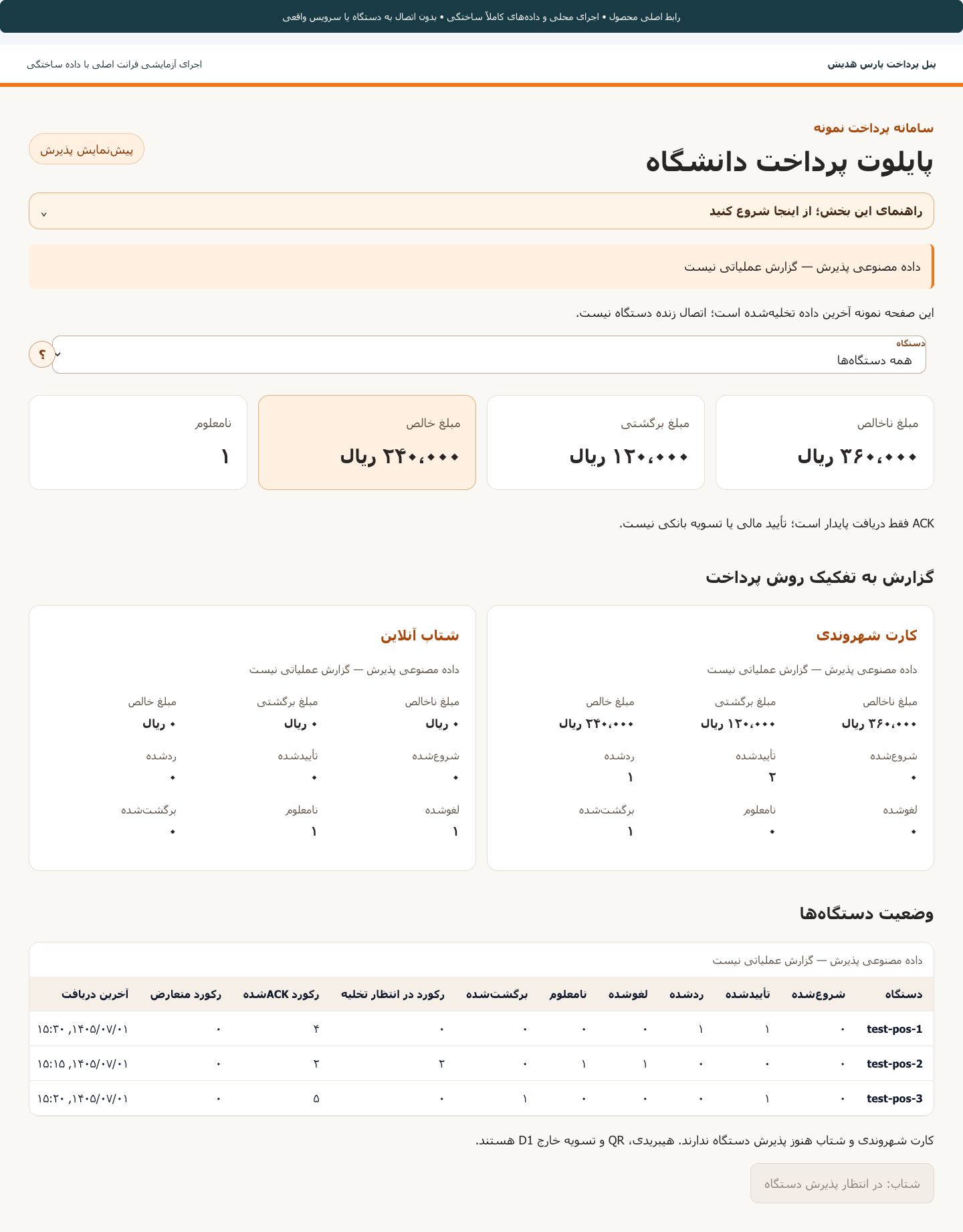
The data shown in this image is synthetic test data.
Pars HadishDetailed product introduction · 6University transport payment concept
Product images
Synthetic transaction report
Original product interface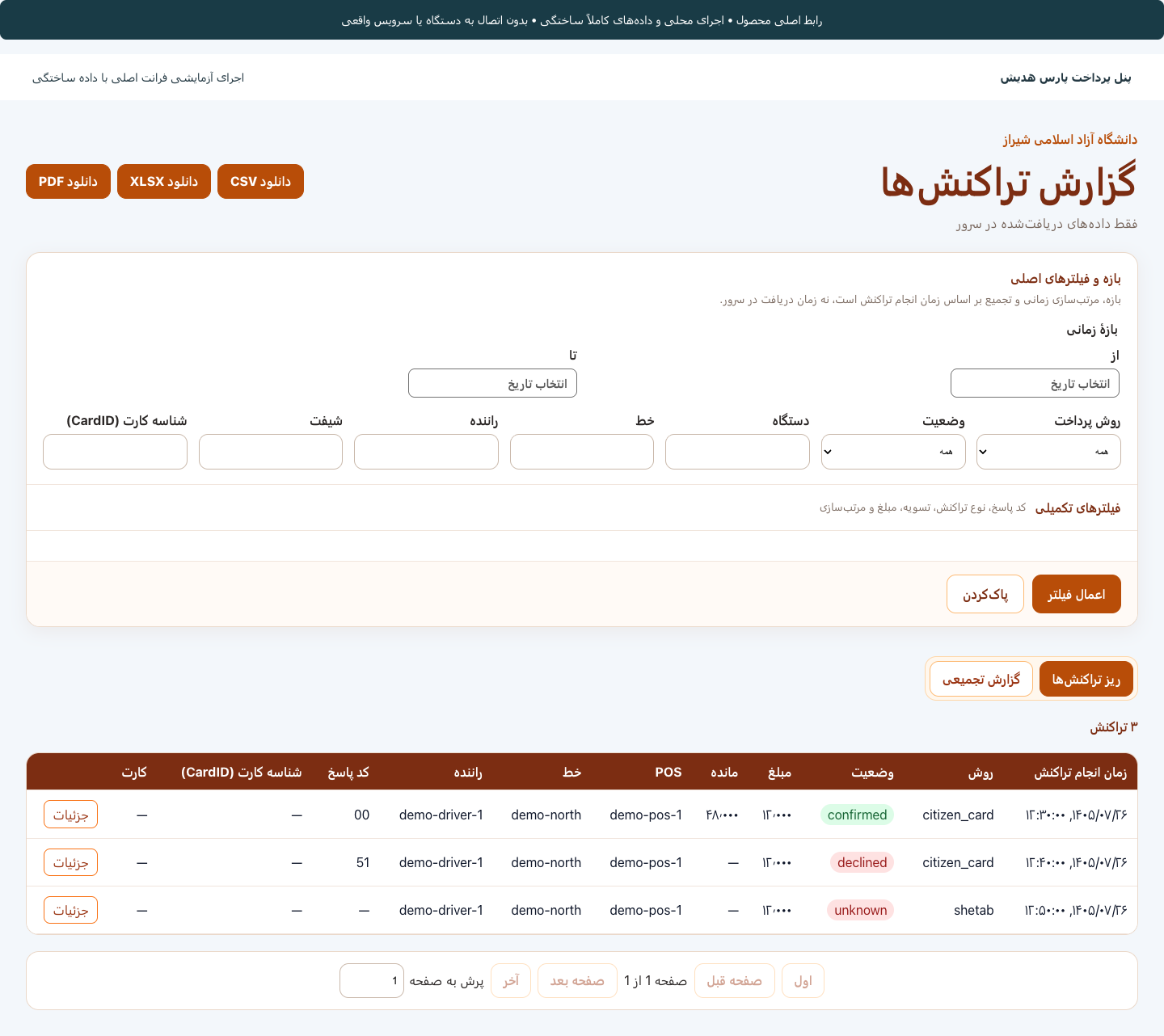
The data shown in this image is synthetic test data.
Pars HadishDetailed product introduction · 7University transport payment concept
Product images
Backoffice rate card management
Original product interface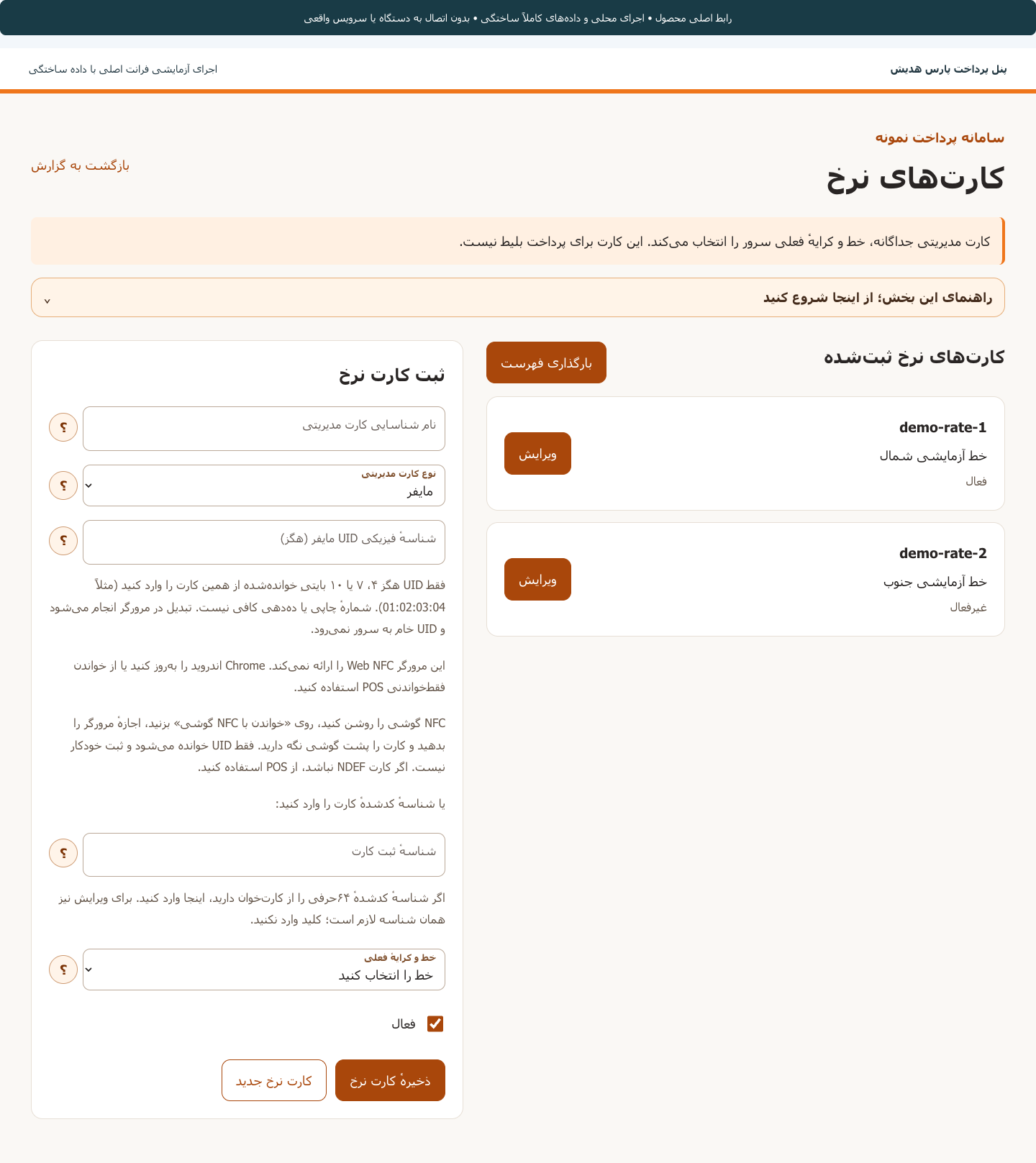
The data shown in this image is synthetic test data.